2022-2027 Strategic Plan
Looking Ahead, Preparing for Growth
Guidance to Take Veritas to the Next Level
Standing at an exciting place of growth and transition, with a newly purchased facility, the leadership of Veritas Academy has prepared this Strategic Plan to guide our steps in the next five years.
Keeping Christ at the center we look to both preserve and strengthen our excellent academics and rich student life experiences with pillars that will support our school's mission of cultivating loving, serving, thinking students through classical Christian education for generations to come.
Vision Statement
Prior to convening the Strategic Planning Committee in fall 2021, the Veritas Academy Board of Governors met to discuss an accompanying Vision Statement for 2021-2026. The general idea was that the Vision Statement would inform and provide the foundation for the 2022-2027 Strategic Plan.
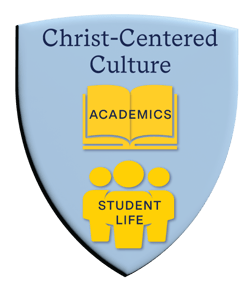 The final Vision Statement from the Board of Governors is shown below in visual format. This Vision highlights “Christ-Centered Culture” as the central characteristic of Veritas Academy, with the two primary pillars being Academics and Student Life. Christ-centered culture – the ultimate goal of the institution – plays out in every aspect of the life of the institution. The outcome of Christ-centered culture is a student who is fully able and capable of engaging with the world as it is today, as an expression of classical thinking, practices, disciplines, and patterns that are defined by Christian faith. This Christ-centered culture supports and makes classical education possible.
Historical Background
Veritas Academy commenced in 1996 with just twenty students and a handful of teachers. Over its first 25 years the school continued to grow to its present-day status of about 300 students, serving Kindergarten through 12th Grade. During this time Veritas Academy built a reputation as the sole Classical Christian School in Lancaster County (PA) and is known for its solid Biblical foundation and academic excellence.
For most of its existence, Veritas rented classroom and office space in the Leola Community Building. In 2021, Veritas purchased the building that it had been previously occupying, resulting in numerous and multifaceted anticipated changes in the upcoming years. First and foremost, as new owners of a permanent facility, Veritas Academy must determine and prioritize which facility improvements and renovations to make both short-term and long-term. As new classroom space will be added and new student applications continue to grow, Veritas must also prepare for significant changes in both the number and demographic composition of its student body. At the same time, attracting, equipping, and retaining excellent faculty must remain a top priority so that the academic excellence and educational rigor that Veritas is known for does not decline. Finally, in order to ensure the internal operations and overall success of the school, revenue must increase, and finances must be managed wisely. All of these factors were critical in developing this Strategic Plan, which will be used to guide Veritas Academy over the next five years.
Methodology
With the Vision Statement as a guide, the Strategic Planning Committee used a well-known research method known as triangulation to collect the data that would ultimately inform the final Strategic Plan. In simplest terms, triangulation is the process of using multiple methods or multiple sources of data to make an informed decision. In our case, the Committee incorporated information from multiple sources including a literature review (primarily in the form of reviewing other Classical Christian Schools’ Strategic Plans), surveys, and interviews to make educated and informed goals, rationales, and objectives.
The general idea was that the literature review would provide insight into what elements other ACCS schools used in their Strategic Plans; the surveys would provide broad-based information about general themes, priorities, and interests in the Veritas community; and the interviews – serving as in-depth and complementary data to the broad picture that the surveys provided – were used to collect more detailed information from key stakeholders. Members of the Strategic Planning Committee used all of this information to refine the goals, rationales, and objectives that are included in this Strategic Plan.
Results
The 2022-2027 Strategic Plan is comprised of five areas of focus which include:-
Community Relations
-
Operations
-
Faculty
-
Finances
-
Facility
Detailed goals, rationales, and objectives appear within each of these five areas of focus.
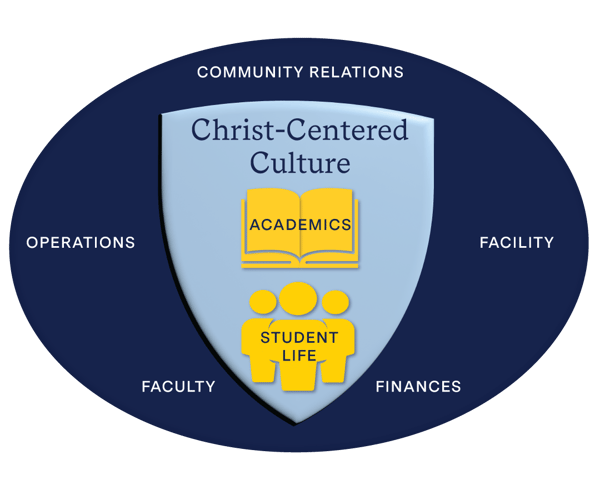
Given that the ultimate purpose and central characteristic of Veritas Academy is Christ-centered culture, the strategic goals within each area of focus serve as the foundation and support for creating Christ-centered culture through our measurable objectives. The goals are intentionally written at a high level and provide a bridge between our measurable objectives and the overall Vision Statement. The hierarchy is such that if our measurable objectives are met – ultimately providing support to our strategic goals – then the strategic goals will in turn support our ultimate purpose and central characteristic of Christ-centered culture. Rationales are also included within each area of focus to clearly delineate the purpose and significance of our strategic goals.
One important aspect to note is that the Strategic Plan was intentionally written at a low enough of a level to provide concrete objectives, yet general enough to afford flexibility for moving forward. Each area of focus includes one objective that is asterisked, which serves as the most important objective from a prioritization perspective. The Strategic Plan should be viewed as a guide for the next five years, yet within that time period, priorities may shift and other areas of focus may come to light given the transitional state that Veritas Academy is currently in.
Focus 1: Community Relations
Engaging our Community through Thoughtful, Intentional Service
Goals
-
Cultivate relationships with people, institutions, businesses, and churches in the surrounding region.
-
Contribute to the health of our local community as a means of demonstrating the love of Jesus and to raise the school’s reputation so that our students are both bolstered in their faith and challenged by the ideas that they will have to navigate in college and beyond.
Rationales
-
To fulfill the Veritas Academy mission of “cultivating loving, serving, thinking students through classical Christian education”, with a view towards “loving and serving” in the local community.
-
For Veritas Academy to be salt and light in our local community as good stewards of the resources with which it has been entrusted.
-
To provide opportunities for Veritas Academy to maintain its reputation in Lancaster County as a center of excellence with regard to Classical Christian education and the Christian faith.
Objectives
-
Develop a curriculum of teaching/training that will effectively grow students’ character, help students understand etiquette, and prepare students to be exceptionally competent and mature ambassadors for Veritas Academy in the community. *
-
Provide a series of experiences that would help students develop the habit of service and give students practical wisdom on how to serve others with their gifts in different capacities (i.e., service work, music, leadership, speaking, helping others).
-
Implement a program that encourages or requires students to serve their respective communities (especially secondary students) and provides Veritas families opportunities for service.
-
Engage the community thoughtfully in order to afford students opportunities to advance in their careers, ministries, and social relationships.
Focus 2: Operations
Building Patterns and Accountability to Ensure Repeatable, Consistent Excellence
Goals
-
Develop protocols, procedures, and an administrative structure which will enable its administrators, staff, and faculty to sustain excellent operations which support a Christ-centered culture.
-
Facilitate employees to succeed in the jobs for which they have been hired by ensuring that each employee has been assigned a clear role, given proper responsibilities, made properly accountable, and ensured creative freedoms.
-
Foster collaborative work relationships inside an adaptive structure that will allow the school to innovate and to cope well with change.
Rationales
-
The internal operations of Veritas Academy must be enhanced and refined in order for Veritas Academy to operate at an optimal capacity.
Objectives
-
Create and implement clear, distinct areas of operational responsibility at Veritas Academy, ensuring that all responsibilities are delegated appropriately, that administration and staff are clearly aware of their responsibilities, and employees can be held accountable for their areas. *
-
Create and implement an operational plan for each departmental area, which include: administrative strategies, reporting against goals, and alteration of strategies.
-
Create and implement a pattern of evaluation tied to high-level operational goals that hold administrators accountable.
-
Establish a pattern of consistent feedback in each major area of responsibility to ensure that administrators see problems and issues quickly.
-
Create and implement a process for reporting annual progress on the Strategic Plan to the Board of Governors and Veritas Community.
Focus 3: Faculty
Finding, Retaining, and Supporting the Best Teachers
Goals
-
Employ excellent faculty who are committed to growing both academically and spiritually, in addition to being invested in the spiritual, intellectual, and psychological development of their students.
-
Faculty should be dedicated to delivering enduring curricula that project the mission of the school to their students.
-
Faculty should develop teaching strategies, techniques, materials, and models which will be useful to successive generations of faculty.
-
Veritas should seek to support its faculty with adequate resources, professional administration, and effective clerical support.
Rationales
-
Faculty will need to be fully equipped to help students grow into their full potential spiritually, intellectually, and psychologically.
Objectives
-
Recruit and retain high-quality faculty which includes: *
-
Improve the system used to recruit high-quality faculty based on an HR and administration plan.
-
Develop incentives and a culture for retaining high-quality faculty by ensuring competitive salaries and conducting regular compensation comparisons with schools of similar characteristics.
-
Implement a reporting structure which allows faculty members to regularly share their perceptions of workload, compensation, working environment, and administrative support.
-
-
Develop onboarding and training programs that support consistent growth in faculty members and fund growth opportunities for them.
-
Collect, preserve, and collate all curricular materials which Veritas can pass on to new teachers.
-
Develop clear targets for each grade level and a system of accountability.
-
Define best practices for each grade level.
-
-
Implement a tactical plan that allows Veritas to move through a phase allowing 25 students per class in a way that protects the educational process and supports teachers and structures as Veritas transitions toward enrolling 20 students per class and two classes per grade.
-
Develop a system of reporting and accountability which assures that Veritas has an administrative structure, training opportunities, and sufficient curricular clarity to help faculty members grow and provide them the support they need to thrive as teachers.
Focus 4: Finances
Stability to Protect Mission and Move Toward Vision
Goals
-
Raise revenue and spend resources in ways that allow the institution and all who work for it to fulfill its mission and promote its values.
-
Pursue operational independence which will allow the school to be sustainable while at the same time flexible enough to manage change effectively.
-
Manage finances so Veritas can meet the demands of growth in a fiscally responsible manner.
Rationales
-
Revenue will be needed for Veritas to grow and finances will need to be well managed in order to ensure successful operations, faculty and student support, and facility needs.
Objectives
-
Fund the percentage of the school’s operating budget through tuition and program income necessary to make Veritas financially independent. *
-
Create a new scholarship organization under Veritas Academy’s name to facilitate tax credit giving.
-
Strategically support the retention and recruitment efforts of faculty.
-
Establish a reserve fund sufficient to maintain operating costs in emergency situations.
-
Explore the creation of an endowment or scholarship fund for designated and/or general scholarship purposes.
Focus 5: Facility
Providing a Home for our School and its Programs
Goals
-
Facilities need to promote and project the school’s culture so that its spaces, along with the ways that they are used, will foster a sense of community dedicated to cultivating in its students a deeper love for Jesus Christ and for one another.
-
Buildings and grounds should be curated in such a way that through them Veritas might strengthen its community’s personal relationships, while making it possible for students to develop godly character through the right exercise of their skills, abilities, minds, and affections.
Rationales
-
With the recent (2021) purchase of the Veritas Academy building, additions and renovations will need to be made. As Veritas Academy did not occupy all of the facility space under its previous leasing agreement, plans will need to be made regarding how best to utilize the new facility space as well as how to improve the space it previously occupied.
-
Student enrollment is expected to increase over the next few years. As enrollment continues to increase, Veritas Academy will need to be able to support this growth.
Objectives
-
Work with an architectural firm to create a master plan for the building and grounds of Veritas Academy.
-
Conduct a feasibility study to inform a capital campaign.
-
Execute a capital campaign that raises sufficient money to accomplish the first phase of the master plan.
-
Ensure proper staffing to support the buildings and grounds of Veritas Academy.
Appendices
Appendix A: Survey Questions to the Veritas Community
Purposes:
-
To help refine Goals, Rationales, and Objectives for each Area of Focus
-
To uncover any themes the Strategic Planning Committee had not yet considered
-
To involve the community in the Strategic Planning process
Survey Questions:
-
How would you describe the culture at Veritas Academy?
-
What differentiates Veritas Academy from other Christian schools in Lancaster County?
-
What have you been pleased with about Veritas Academy?
-
In what ways do you think Veritas Academy can improve?
-
In what ways can Veritas Academy develop better relationships with and contribute to the local community (e.g., people, institutions, businesses, churches)?
-
What character traits and academic knowledge do you think students should learn at Veritas Academy?
-
What changes (if any) do you think Veritas Academy should make to its curriculum?
-
How would you characterize the traits, methods, and teaching style of the teachers you found to be most effective at Veritas Academy?
-
In what areas could the school administration be more effective?
-
Faculty Oversight
-
Facility Oversight
-
Communications
-
Responsiveness to constituent concerns
-
Other (please specify)
-
-
In what areas do you think Veritas should seek to prioritize its finances?
-
Endowment
-
Facility improvements
-
Financial aid
-
Faculty salaries
-
Financial reserves
-
Extracurricular programs
-
Other (please specify)
-
-
What aspects of the facility do you think Veritas Academy should seek to prioritize for additions and renovations during the next five years?
-
Gym
-
Fine arts
-
Parking / drop-off
-
Classroom space
-
Cosmetic makeover
-
Other (please specify)
-
-
Please describe your relationship with Veritas Academy:
-
Parent
-
Student
-
Alumnus/alumna
-
Faculty/Staff
-
Donor
-
Other (please specify)
-
Appendix B: Key Findings from the Survey
The survey was administered to 714 parents, students, alumni, faculty/staff, and donors in the Veritas Community (392 from the current community; 137 alumni; 129 grandparents; and 56 from the Leadership Circle). General themes that emerged from the survey reveal that Veritas Academy:
Christian Culture
-
Is Biblically sound and doctrinally strong
-
Is a tight knit, family-oriented community
-
Values the Lord, family, and community
-
Is socially aware and does not waver in its Biblical foundation (especially with reference to the current political climate)
-
Maintains joyful and fun traditions not found in other Christian schools
-
Will need to ensure that its traditions and excellence do not erode as the school grows
-
Addresses character as well as academic knowledge in its Classical and holistic approach to education
-
May want to consider offering more coursework in apologetics so graduates can better defend their faith in a secular world
Curriculum
-
Maintains strong academics and a rigorous curriculum
-
Should consider offering advanced or AP courses in Math, History, English, Science, and Foreign Language plus STEM
-
Should consider enhancing its writing and grammar program
-
Should consider adding vocational, technical, or “life skills” coursework
-
Will need to develop students who can stand strong in secular universities and work environments
-
May want to consider teaching solid phonics to primary students
Faculty
-
Employs strong faculty who are dedicated, patient, and who truly care about the well-being of the students
-
Employs faculty who are very knowledgeable in subject matter and can instill Godly virtues in students
-
Would do well with improved faculty and administrative oversight
-
Should consider increasing faculty salaries
Operations and Facility
-
Will need to prepare for school growth and renovations to the new facility
-
Will need to improve communication
-
Should consider providing a stronger mentorship opportunity for both teachers and students
Community Relations
-
Should consider improving its branding and being a voice in the community so that the community knows what the Veritas Academy identity is
-
Will need to intentionally invite the at-large community to Veritas events
-
Should consider an increased focus on community service
Appendix C: Interview Questions for the Veritas Community
Purposes:
-
To help refine Goals, Rationales, and Objectives for each Area of Focus
-
To uncover any themes the Strategic Planning Committee had not yet considered
-
To involve the community in the Strategic Planning process
Interview Questions:
- What led you to sending your children to Veritas Academy?
- How would you describe your vision of the ideal/prototypical Veritas Academy student?
- What have you been pleased with about Veritas Academy?
- Prompts include culture, academics, branding/reputation, community impact, etc.
- In what ways do you think Veritas Academy can improve?
- Prompts include culture, academics, branding/reputation, community impact, etc.
- How can Veritas Academy best cultivate relationships with people, institutions, businesses, and churches in the surrounding region?
- How can Veritas best contribute to the at-large community?
- How would you characterize the traits, methods, and teaching style of the teachers you found to be most effective at Veritas Academy? And why?
Appendix D: Key Findings from the Interviews
Interviews were conducted with 24 new families, seasoned families, and donors to provide more detailed information about what makes Veritas attractive to the community as well as where funds should be allocated. General themes that emerged from the survey reveal that Veritas Academy:
Recruitment
-
Recruits many of its students through relationships and “word of mouth” as a result of knowing others in the Veritas Community
Christian Culture
-
Is Biblically sound and doctrinally strong
-
Does not waver or compromise on Biblical truths
-
Maintains a supportive family-oriented culture and environment
-
Addresses character as well as academic knowledge in its Classical and holistic approach to education
-
Will need to adequately equip students to defend their faith in a secular world
-
Maintains joyful and quirky/fun traditions not found in other Christian schools
Curriculum
-
Maintains strong academics, high standards, a rigorous curriculum, and excels at preparing students for college from an academic standpoint
-
Teaches and trains students to put forth their best effort and to excel in every aspect
-
Trains students in logic, public speaking, rhetoric, and the art of debating
-
Maintains a high-quality music, theater, and arts program
-
May want to put a stronger emphasis on sports and increasing school spirit with regard to athletics
-
May want to put a stronger emphasis on current events and modern texts
-
Will need to consider how to best address race and racism in our current culture as well as in curriculum materials
-
May want to consider adding AP, technology, and STEM courses
Faculty
-
Employs strong faculty who are Biblically strong, dedicated, patient, and who truly care about the well-being of the students
-
May be experiencing more than expected turnover at the secondary level
Operations and Facility
-
Will need to prepare for school growth and renovations to the new facility
-
Should invest financially in its teachers and building (facilities)
-
May want to consider hiring a counselor to help students transition to secondary, prepare for college, and to help students discover their interests in preparation for life after Veritas
-
May do well to develop better resources for students with learning disabilities
-
Will need to improve communication
Community Relations
-
May do well to hold periodic “Town Halls” or other events that showcase Veritas leadership
Appendix E: Key Findings from the Literature Review
The literature review – primarily comprised of reviewing Strategic Plans from other Classical Christian Schools – helped to inform what topics should be considered for the Veritas Strategic Plan. The general themes and topics that emerged from this review and that are typically included in the Strategic Plans for other Classical Christian Schools are as follows:
-
Finances
-
Funding
-
Enrollment trends
-
Tuition rates
-
Financial aid
-
Student/teacher ratio
-
Faculty and staff salary / benefits
-
Curriculum
-
Performance on college entrance exams
-
College success rates
-
ACCS accreditation status
-
Recruiting ability
-
External branding
-
Internal culture
-
Facilities
-
Athletics
-
Transportation
-
Retention (students, faculty, and staff)
-
Attractiveness of geographic location
-
Current political climate